








ICD-10 Codes for Neurological Conditions Stroke and Epilepsy
August 4, 2025
ICD-10 Codes for Diabetes: Coding Tips for Type 1 and Type 2
August 18, 2025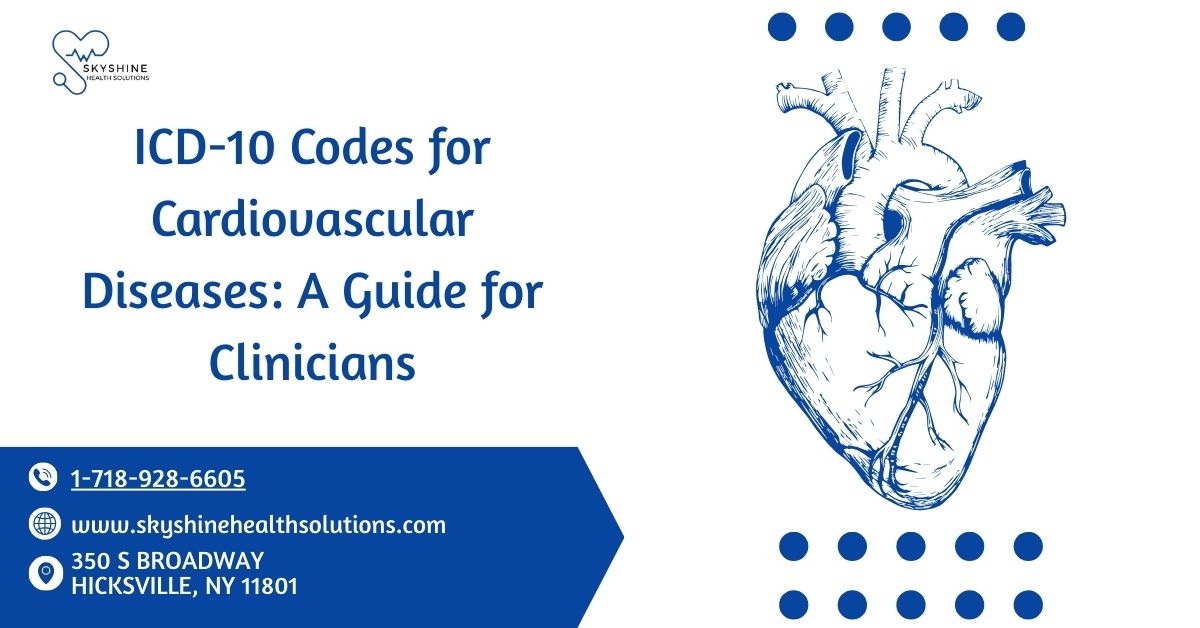
Cardiovascular diseases are still one of the main reason of illness and deaths around the word. Accurate ICD-10 coding for these diseases is extremely important for doctors. Any mistake in coding can lead to claim denials, delayed payments, or compliance issues under HIPAA and CMS . The International Classification of Diseases, 10th Revision (ICD-10), has specific codes for heart and blood vessel problems under the I00-I99 range. For doctors, understanding the I00-I99 chapter is important to accurately record the complex heart conditions. This guide simplifies these codes, focusing on common conditions like coronary artery disease, heart failure, and hypertension, and gives helpful tips to avoid coding errors.
Key ICD-10 Codes for Cardiovascular Conditions
The I00-I99 chapter covers diseases of the circulatory system. Below are key categories and examples for common cardiovascular conditions:
-
-
I10: High blood pressure without a known cause.
-
I11.0: High blood pressure that causes heart disease with heart failure. It needs to be noted what type of heart failure (like systolic or diastolic).
-
-
-
I25.10: Atherosclerotic heart disease of heart’s coronary artery without angina pain.
-
I25.110: Atherosclerotic heart disease with unstable angina pectoris.
-
-
-
I50.22: Long term systolic (congestive) heart failure.
-
I50.32: Long term diastolic (congestive) heart failure.
-
-
-
I48.91: Atrial fibrillation that’s not specified.
-
I47.2: Ventricular tachycardia or Fast heartbeats from the lower chambers..
-
-
-
I21.09: Heart attack with a rise in the heart’s electrical activity in another part of the front wall.
-
I22.2: A later heart attack that doesn’t have the electrical rise.
-
Tips for Accurate Cardiovascular Coding
To maximize proper payments and compliance, clinicians should follow these coding strategies:
-
-
Make sure to write exactly what the problem is, how bad it is, where it is, and any extra issues.
For example, instead of just “heart failure,” write “long-term systolic heart failure.” -
Connect Problems for example If high blood pressure leads to heart failure, write that relationship to use codes like I11.0.
-
Use combined codes to link related conditions as ICD-10 allows combination codes for conditions like hypertensive heart disease with kidney disease (I13).
-
Stay updated as CMS updates ICD-10 codes annually. For example, new codes for pulmonary high blood pressure were added in recent years.
-
Work closely with medical coders to ensure documentation supports the selected codes, reducing claim denials.
-
Common Coding Challenges and Solutions
-
-
Improper documentation, such as “chest pain” without specifying angina or MI.
-
Solution: Use diagnostic test results (e.g., ECG, troponin levels) to confirm the diagnosis and select precise codes.
-
-
Over-coding or under-coding complications, like missing heart failure in CAD patients.
-
Solution: Review patient history and current symptoms to capture all relevant conditions.
-
-
Missing a coexisting condition, such as smoking (Z72.0) or diabetes (E11), that impact cardiovascular treatment.
-
Solution: Include lifestyle factors and simultaneous presence of two or more diseases in the patient record for comprehensive coding.
-
-
How Accurate Coding Improves Patient Care
Mastering ICD-10 codes for cardiovascular diseases helps doctors to improve documentation, streamline billing, and enhance patient outcomes. Beyond getting payment right, precise ICD-10 coding for cardiovascular diseases improves care coordination. For example, coding I50.22 for chronic systolic heart failure ensures specialists understand the patient’s condition, indicate the treatment plans. It also helps in health research, like tracking trends in heart failure, which can lead to better avoidance. By following the mentioned tips , you can get through the I00-I99 section better. Start reviewing your records today to make sure everything is correct and care is top-notch.

Read a similar blog on ICD-10 Coding for Neurological Conditions Stroke and Epilepsy
Have questions? Visit Medical Billing FAQs